A brief chronology and critique of federal cybersecurity
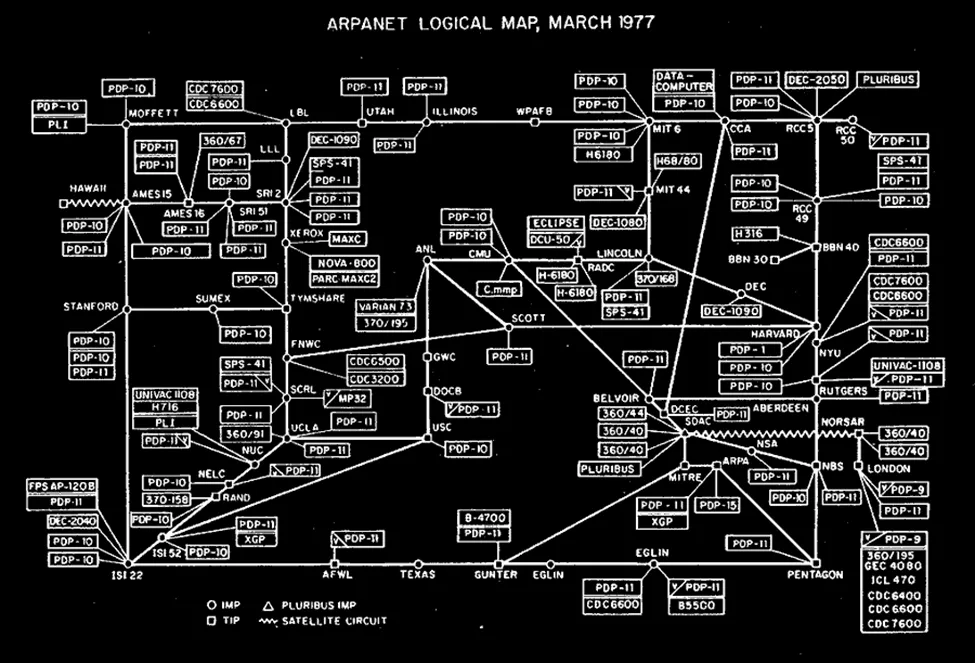
We live in extraordinary times. For much of our nation’s history, we were in constant conflict. Whether it be in the continental states, or across the pond, or in Asia, the relative peace of the past 30 or so years is an anomaly in the now 250 years of our great American experiment. In the ’90s, the United States achieved its goal: the collapse of the Soviet Union. What followed was a rare moment of unipolar power, only preceded by the United States in the late 1940s before the Soviet Union reached nuclear parity. This period of overwhelmingly asymmetric advantages largely reflected itself in cyberspace. As American tech flexed its superiority and global influence with the rise of the Macintosh, Windows, and Netscape, not long after did firewalls and intrusion controls lay the very foundations of today’s cybersecurity industry. Giants of the industry, like Check Point and later Palo Alto Networks, and the gold standards of early tooling, like Nmap or Wireshark or Snort, naturally followed. Each decade was defined by a generational leap in progress, and the market capitalized. The sprawl of the World Wide Web was tamed by two Stanford PhD students and a search bar with ads. Clunky devices for music, messaging, and accessing the web gave rise to the smartphone and a now-famous presentation at Macworld. AWS and Microsoft made compute a utility, OpenAI and Anthropic democratized intelligence, and soon, future giants will race to make quantum scalable. What was as little as 111 hosts connected to the ARPA network in 1977 slowly became trillion-dollar companies and the technological future of the world.
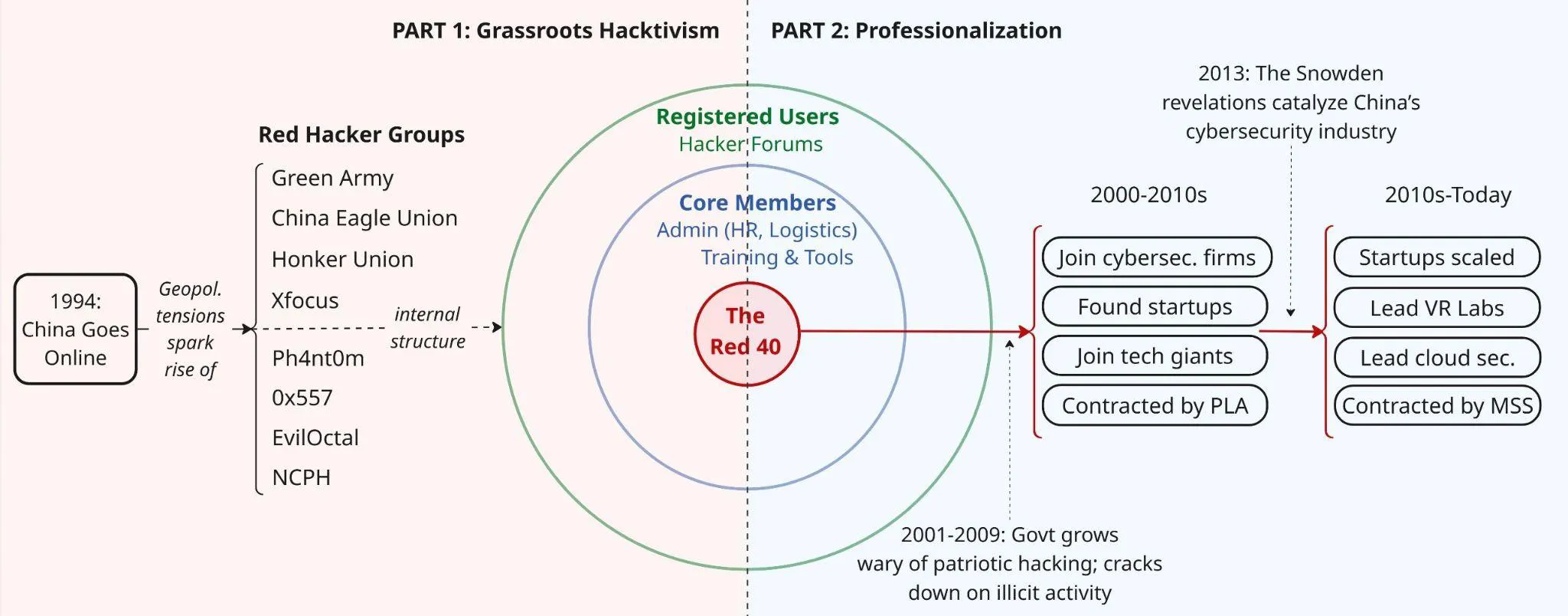
Wall Street wasn’t the only interested party in the rise of American tech and, subsequently, the cyber industry. The National Infrastructure Protection Center (NIPC) was stood up inside the FBI in 1998 and formalized months later by the Clinton administration’s PDD-63. Sector-specific agencies (SSAs, now formally known as SRMAs) like DOE, HHS, and Treasury were informally designated to protect their own assets. Information sharing was encouraged, but not mandated, and rarely enforced. Cyber was important, but it wasn’t a primary theatre for investment or conflict. At the time, some might even argue this was “good enough.” Lest we forget that hacking used to be about defacing a website, not destroying a country. Even in the late 1990s, most Chinese hacking operations were informal, decentralized, tactically sloppy, and largely grassroots-led. Formal research into indigenous offensive tools didn’t start until the early 2000s.
This period even predated cybersecurity earning a spot on boards. To most, it was an extension of IT, not a pillar of national power. PDD-63 treated critical infrastructure as a growing concern, but execution was lackluster. SSAs had institutional muscle, but there was no national grand strategy. It was pure faith in the free market, and the idea that innovation itself is our best defense. And for a while, that faith actually held merit.
The somber morning of September 11th changed everything. What followed in its wake was a centralization of cybersecurity policy, power, and enforcement, the likes of which hadn’t been seen since the start of the Cold War. In simpler terms, these events birthed the Department of Homeland Security (DHS). DHS combined 22 different federal agencies, resolving many coordination gaps and inefficiencies that generally plagued the nation’s cyber functions. The Homeland Security Act of 2002 was a sweeping mandate, granting powers to “assess vulnerabilities” across critical infrastructure and coordinate information sharing across the federal government. Gradually, cyber improved and became one of DHS’s five foundational pillars.
Still, there was work to be done. DHS’s cyber mission had to fight for more attention, funding, and legitimacy. The TSA was more relevant. So too was FEMA after events like Hurricane Katrina. But as our adversaries matured, so did we. In 1986, Clifford Stoll used a printer to trace a 75-cent accounting error to a West German hacker selling secrets to the KGB, a foreshadowing of the rise of incident response and digital forensics, and honeypots, which are particularly relevant as of last week. iDefense pioneered the bug bounty industry in 2002. Metasploit gave pentesters free exploits in 2003, and a decade later, progress only accelerated. CrowdStrike defined EDR in 2011, Mandiant named APT1 in 2013, and by 2019, Google’s Chronicle had graduated from an incubator program and Microsoft Sentinel had shed its code name. But none of this happened in a vacuum. The rise of counterterrorism and surveillance, the Target breach, attacks on Sony and Equifax, the Russian “disinformation machine,” SolarWinds and Colonial Pipeline, the surge of Chinese IP theft. These stories weren’t just limited to a small community of hacktivists or insiders deep in some obscure Discord or Telegram group. They affected everyone, and suddenly, cyber became less quirky, niche, and unknown. It became personal. This shift caught swaths of attention, including those at 1600 Pennsylvania Avenue.
This decade was also one thing: consistent. Each new Presidential administration tended to plug the operational gaps of the previous administrations. Unsurprisingly, DHS’s power expanded. In 2016, PPD-41 designated DHS as the federal lead for “asset response,” granting it incident response authority for agencies and companies alike. Executive orders like EO 13636 in 2013 and EO 13800 in 2017 continued to expand the government’s responsibilities. In parallel, the NIST Cybersecurity Framework (CSF) quietly emerged as the default model for voluntary, sector-agnostic guidance.
As national priorities shifted from combating counterterrorism to once again great power competition, Congress looked in the mirror. In 2018, after years of gradually expanding the cyber portfolio within DHS, Congress elevated the National Protection and Programs Directorate into its own standalone agency: the Cybersecurity and Infrastructure Security Agency (CISA). But today’s defense is a unique paradox, one in which the front-line defense of our most critical infrastructure is tasked to the private sector, and the coordination of its protection is tasked to the public sector. The somber truth is neither side is resourced to do both well. CISA does not own much of the infrastructure under its mandate. The private sector often lacks the affordable intelligence it needs to defend it. This is a unique operating model in our beloved Republic.
We have another special blessing in America: almost any mention of federal regulation triggers raw, visceral skepticism from people who believe the government’s job starts and ends with paving roads and funding the military. That skepticism prevents overreach. But it’s also a liability. For a time, the prevailing theory that getting the right information in the right hands is enough largely succeeded. CISA launched Shields Up in response to Russia’s invasion of Ukraine, a campaign that brought cybersecurity even more into the public vernacular. The agency stood up the Cyber Safety Review Board (CSRB), which later launched extensive investigations into software and telecom providers. Companies like Microsoft (admittedly my employer) were held accountable for egregious Secure by Design failures. The agency also matured the National Risk Management Center (NRMC). It even started issuing more practical advisories and joint bulletins. But as an old proverb proclaims, “all good things must come to an end.”
CISA has arguably lost more cumulative talent and funding over the past year than the preceding seven years combined. Branch Chiefs have left to start their own consultancies. Career civil servants still there are likely trying to leave for Big Tech or a startup. Political appointees, many lacking operational experience, are at the helm. The result isn’t just monetary constraints. It’s memory loss. And, most concerning, a loss of coordination between the public and private sectors. Its new 2030 plan promises a proactive agency built on partnerships, but the White House left it conspicuously absent from its new AI task force. Worse, in September, it scrapped free cybersecurity assessments for infrastructure operators. And although hiring has since restarted, some might argue it’s too little, too late for an agency that hasn’t had a Senate-confirmed director since January of last year.
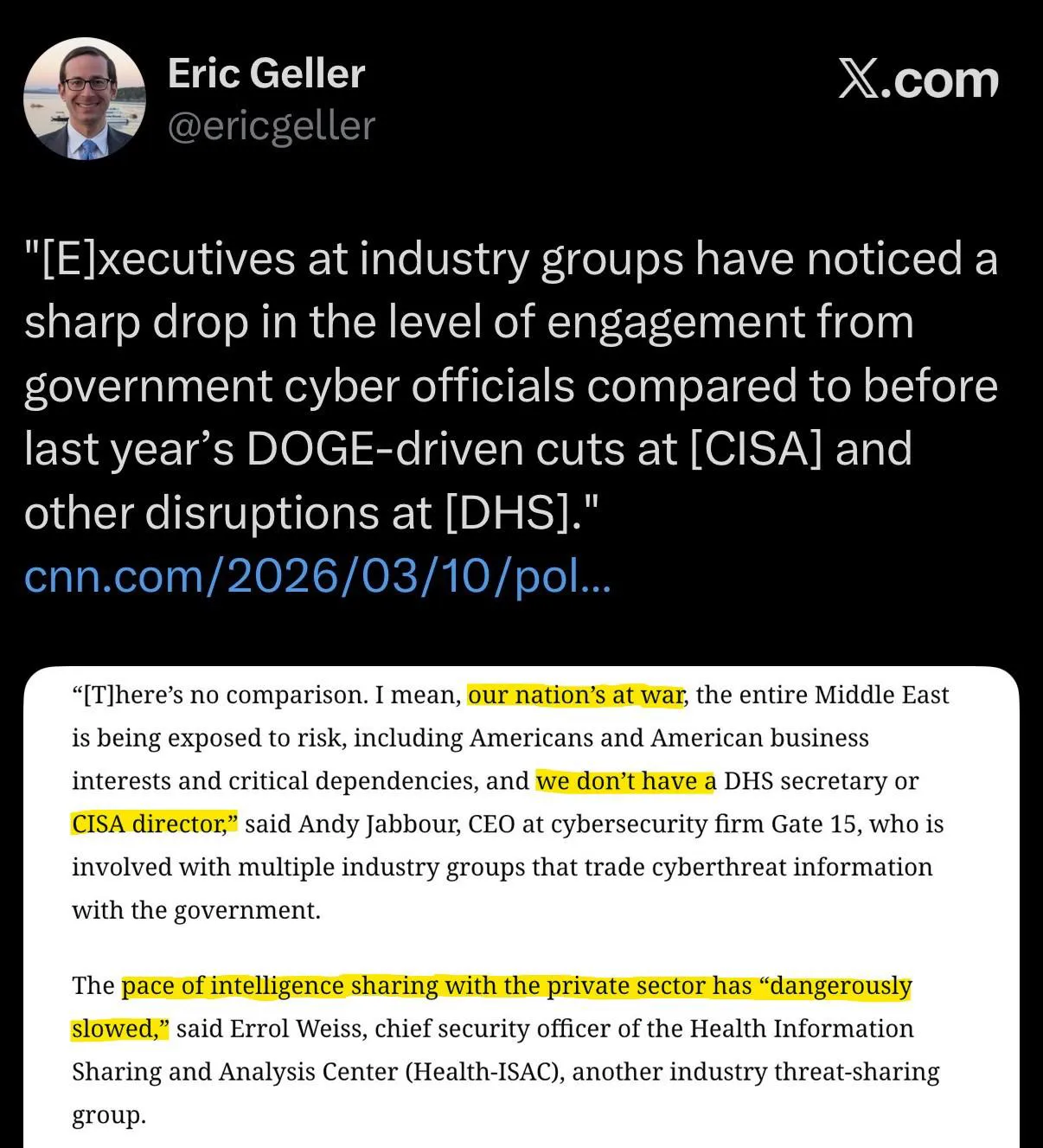
But, this is America. We’ve been here before. After the Snowden leaks, the NSA suffered a collapse of morale, a near-total loss of public trust, and a fundamental reckoning with its own doctrine. And while the institution lost expertise and its power was diminished, the mission was not lost. America’s dominance in proprietary, offensive cyber tooling didn’t end, and the lights stayed on at home. Still, America deserves more.
The so-called Regulatory State, at its best, tries to protect people and preserve public safety. At its worst, it creates a vast expanse of paperwork and limits abundance. Much of CISA’s current guidance lacks specificity or anything enforceable. It’s more along the lines of “stay healthy” instead of “take 500 milligrams twice a day for ten days.” Specificity invites liability, and that’s the point. But in our system, CISA issues vague recommendations and rarely prescriptive guidance, and when they do it’s weeks after a breach, because anything stronger would launch legal battles over agency authority and liability. Take the recent Scattered Spider saga for example, considering it made the rounds in the media. The ransomware wasn’t deployed by a known nation-state-affiliated group specializing in initial access. It was deployed by teenagers. And the most shocking revelation is how simple it all was. There was no novel malware or exploit. They simply tricked the help desk. That’s it, and yet, it worked. Sometimes all it takes is patience and time, not even a phone call. In 2022, a dev calling themselves “Jia Tan” started submitting small, helpful patches to XZ Utils, a largely unknown library buried inside nearly every Linux distribution and maintained by one unpaid, overworked, and likely disgruntled volunteer. Over two years, Jia Tan earned the maintainer’s trust, became co-maintainer, and in early 2024 slipped a backdoor into a normal update. It was caught by sheer luck and an absurd attention to detail. Today, the learning curve has all but disappeared. Platforms like ARTEX have democratized the attack, and suddenly everyone wants to be a red teamer, a hacker, or a prompt kiddie who can do with a few plain-English prompts what traditional C2 frameworks took weeks to learn. And if the unprecedented outages of the past week across Microsoft, the FAA, and banking are any sign, our systems are dependent, not redundant, and everything can grind to a halt with something as simple as a capacity constraint. If America, with all its power and might, wanted to get serious about ransomware and other threats, it would issue more prescriptive guidance, pass fewer but more meaningful mandates, and provide funding to help small businesses implement them. Consider the alternative: more goal-based guidance, vague recommendations, and “good faith” reporting that provide legal cover for doing nothing. Without real accountability, why would a company not roll the dice?
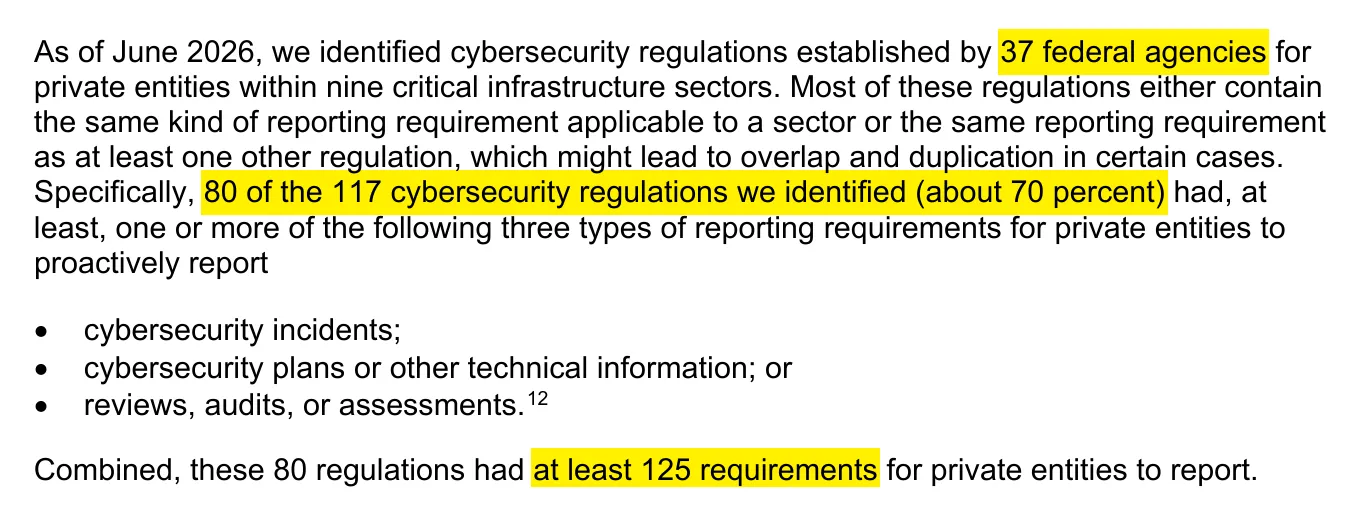
One would like to believe America’s critical infrastructure is as resilient as Troy before the siege. Just walk through Midtown and take note of the iron beams and steel towers rising into the sky, or the massive wind turbines scattered across Midwestern farm fields on your next road trip. In a weird way, it all feels permanent. After all, much of the infrastructure that exists today will outlast even us. The unfortunate reality is that many of the systems powering this infrastructure depend on software that ages 10x faster than the actual roads, pipelines, and grids, which now inherit the same vulnerabilities as our apps. In our ever-changing, increasingly interconnected and weird world, Patch Tuesdays now matter just as much as making sure gas is flowing out of the pump. Yet Washington’s answer has mostly been more: more advisories, more frameworks, more acronyms, and more reporting requirements. NIST SP 800-53, FedRAMP, CMMC, the HIPAA Security Rule, and a dozen coordination bodies with absurdly long names. Each is valuable on its own. Together they’re a firehose, and the burden of prioritizing it tends to fall on the organizations with the fewest analysts and the smallest budgets.
The private market hasn’t solved this either. For example, modern threat intel platforms and hyperscalers’ security tools love complexity: unpublished APIs, proprietary schemas and query languages (KQL, EQL, SPL, etc.), and $50,000 per analyst per year licenses. New red teaming agents (XBOW, Armadin, Microsoft’s Project Perception) will add even more to the final price tag. Intelligence that is cost-prohibitive, impractical, and inconsistent might as well be deemed non-operational. If you’ve ever walked the floor of RSA, or DEFCON, or Black Hat, you know the problem was never a shortage of solutions or information. Next time you’re there, ask ten people how to fix cyber and you’ll receive ten different answers.
This is where the federal government keeps falling short. Too often, its guidance arrives too late and stops at awareness, leaving the hardest decisions to the people least equipped to make them. There’s also a reality to acknowledge: prescriptive guidance doesn’t mean CISA’s expected to build and operate everything on its own. The agency’s role is guidance, coordination, and national leadership, not building tools or specialized engineering teams from scratch. A third-party enterprise with the technical depth to maintain and scale the tools and do the defense is much more feasible. In many ways, that separation is a strength. It allows CISA to set direction while tapping into private-sector expertise to actually run and improve the technical posture over time. The way CISA wins isn’t a team of five building and shipping prototypes. It’s tapping into the greatest benefit America has to offer: decentralized, open innovation and an entrepreneurial spirit. After all, this spirit is encapsulated in the coin in your very pocket and wallet right now… “E Pluribus Unum” or “Out of many, one.” As a wise man named Bruce Schneier once said, “security is everyone’s responsibility.” Trust isn’t built through volume or vagueness. It is built through raw practicality. CISA must take more pride, and more risk, in issuing prescriptive guidance sooner rather than later. It must work with its congressional counterparts to pass fewer and more meaningful mandates, and the funding small businesses need to implement them. It must build practical tools with its private-sector partners. And it must open-source what it cannot do alone. If CISA doesn’t move into the future, our adversaries certainly will.